
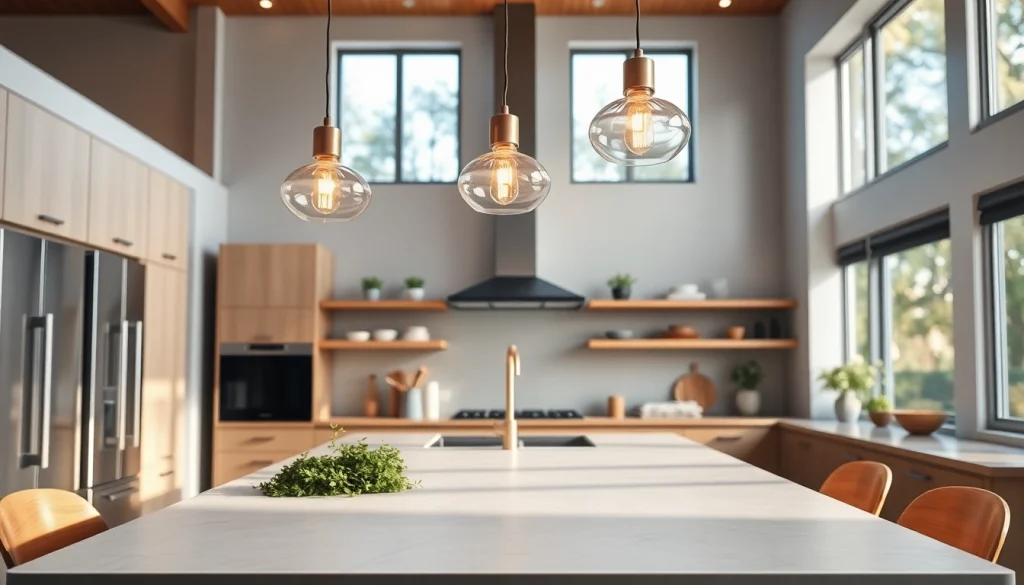
What is Island Lighting?
Definition of Island Lighting
Island lighting refers to the specific art and science of illuminating kitchen islands or dining areas within homes, focusing on unique fixtures that enhance both functionality and aesthetics. These fixtures can range from pendant lights to recessed lighting, designed to create an inviting atmosphere while providing sufficient illumination for tasks such as meal preparation, dining, or socializing. Integrating island lighting into your home can dramatically affect both the ambiance and the practicality of your space.
Benefits of Island Lighting
The benefits of well-designed island lighting are manifold. First, it acts as an essential source of task lighting, allowing proper visibility when cooking or doing homework. Moreover, it contributes to the overall aesthetic of the kitchen or dining area, making these spaces feel more welcoming. Good island lighting can also create a visual focal point that draws attention, helping to elevate the room’s design. Energy-efficient bulb options help reduce utility costs while maintaining bright illumination.
Common Uses in Home Design
Common uses of island lighting can be observed in various areas of home design, particularly in modern kitchens where cooking islands have become focal points. Pendant fixtures can act as both art and illumination, offering versatility in design. Similarly, chandeliers over a dining island can infuse an element of luxury, while recessed lights can provide an unobtrusive, classy touch. Additionally, these lights can be used effectively in bars or lounges within a home, adding a specific character and enhancing social engagement.
Types of Island Lighting Fixtures
Pendant Lights: A Versatile Choice
Pendant lights are a quintessential choice for island lighting due to their versatility and stylish appeal. Available in various shapes, sizes, and styles—ranging from industrial to elegant—pendant lights allow homeowners to personalize their space. These fixtures can be grouped in clusters or arranged linearly, adapting to any design theme. They also serve a dual purpose: providing task lighting directly above surfaces while contributing to the room’s decor.
Chandeliers for Dramatic Effect
For those seeking a more dramatic and upscale appearance, chandeliers offer an exceptional solution for island lighting. These large, ornate fixtures can serve as the centerpiece of a dining area, making a bold statement. The cascading design of chandeliers provides ample light while enhancing the charm of the space, often becoming a conversation starter. Various finishes and crystal designs suit a range of aesthetics, from contemporary to classic.
Recessed Lighting for Subtle Elegance
Recessed lighting is another functional option for island lighting, particularly when a clean, modern look is desired. These fixtures are embedded in the ceiling, providing a sleek, unobtrusive illumination option that saves space and enhances the overall design of the kitchen. Recessed lights can be strategically placed to highlight specific areas, such as the kitchen island, without overwhelming the space. Adjustable fixtures can offer versatility, allowing homeowners to focus light exactly where it’s needed.
Designing Your Space with Island Lighting
Selecting the Right Style
Choosing the right style of island lighting is fundamental to achieving a cohesive look in your kitchen or dining space. Consider your room’s existing decor—modern, traditional, or eclectic—and select fixtures that will either complement or contrast effectively. For a more contemporary look, minimalist pendant lights or geometric designs may be ideal, while rustic spaces could benefit from vintage or industrial lighting styles.
Factors to Consider for Placement
Placement plays a pivotal role in the effectiveness of your island lighting. Generally, fixtures should be hung 30 to 36 inches above the countertop. The distance allows for adequate task lighting while ensuring the fixtures do not obstruct sightlines. Also, consider how many fixtures will be needed; a larger island might require multiple pendants to ensure even lighting. Always assess the height, scale, and weight of the fixtures in relation to your space.
Creating Balance with Other Lighting Elements
To develop a well-rounded lighting scheme, it’s essential to create balance with other elements in your space. Pair island lighting with ambient lighting—such as overhead lights or window treatments—to maintain a cohesive look. Furthermore, incorporating accent lighting, such as under-cabinet lights, can enhance the feeling of depth and warmth in the room, elevating the overall design and functionality.
Installation Tips for Island Lighting
Tools and Materials Needed
Before installing your island lighting, gather essential tools and materials, ensuring a smooth process. You will typically need a drill, wire strippers, electrical tape, a voltage tester, and screwdrivers. Having the proper hanging hardware and safety gear, including gloves and goggles, is also essential to ensure both convenience and safety during installation.
Step-by-Step Installation Process
The installation of island lighting can be achieved with a few straightforward steps:
- Ensure the power is turned off
- Determine the placement for your fixtures and mark where they will hang.
- Install a junction box if necessary, according to local electrical codes.
- Run wiring from the junction box to where the light fixtures will be hung.
- Securely mount the fixture according to the manufacturer’s instructions.
- Wire the light fixture correctly using wire nuts, and securely attach the canopy.
- Restore power and test your new island lighting.
Each step follows essential safety precautions and aligns with local building regulations.
Common Mistakes to Avoid
When installing island lighting, several common mistakes can be easily avoided. First, ensure that the fixtures are not hung too low or too high, as this can disrupt both functionality and aesthetics. Also, be cautious with the layout; too few fixtures can result in poor illumination, while overcrowding can clutter the space. Lastly, always check the light bulbs and wiring connections to prevent future safety hazards.
FAQs about Island Lighting
How high should island lighting be hung?
Typically, pendant lights should be hung 30 to 36 inches above the countertop for optimal lighting and aesthetics.
What types of bulbs are best for island lighting?
LED bulbs are recommended for energy efficiency, longevity, and providing bright illumination suitable for kitchens.
Can I use multiple fixtures for island lighting?
Yes, using multiple fixtures can create a layered lighting effect, adding interest and functional light to the space.
How do I choose the right size for island lighting?
Select fixtures that fit the scale of your island—generally, aim for 24 inches of pendant separation per fixture.
What style of island lighting matches a modern kitchen?
Sleek pendant lights or geometric fixtures often fit well in modern kitchens, enhancing the contemporary feel.